Commercial production
AI ad production: brief, cost and deliverables
Plan an AI brand ad with a practical brief, clear revision stages and delivery checklist. Learn what affects a quote before commissioning your next film.

An AI advertisement is a directed film that uses generated images or video as part of production. A useful brief specifies the audience, one message, product references, intended placement and delivery formats. The quote should cover creative development and finishing as well as generation. A software subscription is not the cost of a complete campaign.
What should a brand send an AI filmmaker?
Send approved product photographs, accurate packaging artwork, brand guidelines and the claim you want the viewer to remember. Add the placement, approximate duration, language, deadline and a reference film with a note explaining what you like about it. A reference is a direction for discussion, not permission to copy another campaign.
For a mattress film, for example, distinguish a soft, restful mood from a factual claim about support or materials. The mood can guide lighting and pacing. Product claims need information supplied and approved by the brand. Avoid making a generated animation look like a scientific test when no test exists.
- Audience: who should recognise the problem or desire?
- Message: what single idea must survive after the film ends?
- Product truth: which colours, dimensions, labels and features must remain accurate?
- Delivery: which ratios, durations, languages and caption versions are required?
- Approval: who signs off the script, visual direction and final cut?
What changes the cost of an AI advertisement?
Scene count, product accuracy, character continuity, complex actions, voice work, music, revisions and deliverable versions all affect scope. A simple abstract product reveal and a dialogue scene with recurring characters create different review workloads even when both run for fifteen seconds.
Ask for a written scope separating concept development, storyboard approval, production, editing and final delivery. Confirm whether an additional concept or a new voice language is included. No fixed price is published here because the brief determines the work; request a quote through the AI brand ads service.
How should approvals work?
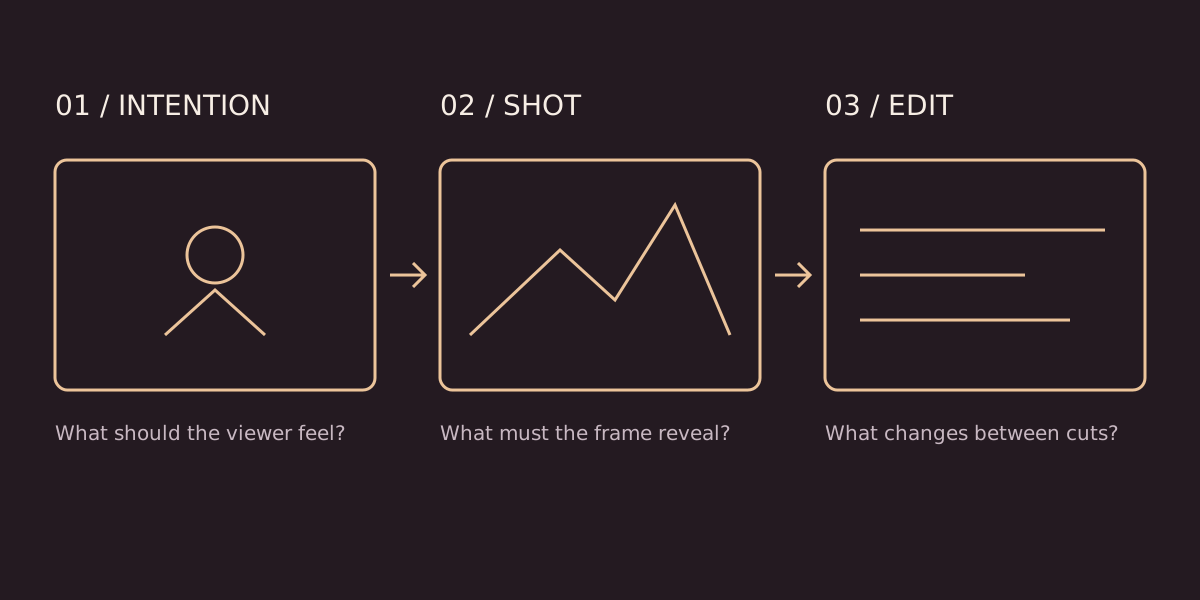
Approve the message first, then the visual direction, then a rough sequence with temporary sound. Review product details before investing in polished transitions. Approve the complete cut before creating multiple exports. This makes feedback specific: replace a drifting label, shorten a pause or clarify the final action.
An illustrative fifteen-second structure is three seconds of a recognisable situation, seven seconds demonstrating the product idea and five seconds for a clear closing message. Treat this as a starting exercise, not a proven performance formula. Test the story against the audience and platform rather than forcing every product into the same timing.
What should the final delivery include?
Agree the master resolution, frame rate, sound format, caption treatment and delivery ratios before production. Request an approved master, platform copies and a small review copy. Establish who keeps the source files and which music, voice and image permissions apply. Do not assume every subscription includes the same usage rights.
A vertical placement often needs a deliberately recomposed frame. Keep text and product details readable instead of automatically cropping a landscape master. Inspect the first and last frames, logo timing and sound on a phone as well as on a larger display.
Does an AI ad guarantee sales?
No. Creative quality is one part of a campaign. Offer, audience, placement, landing page and measurement also affect outcomes. Judge a film against its communication objective, then measure campaign results separately. This portfolio does not present speculative conversion or return-on-ad-spend figures as client results.
Review the selected films, then use the film briefing guide to prepare an enquiry. Include the required formats and your deadline so the first conversation can focus on a feasible production plan.